
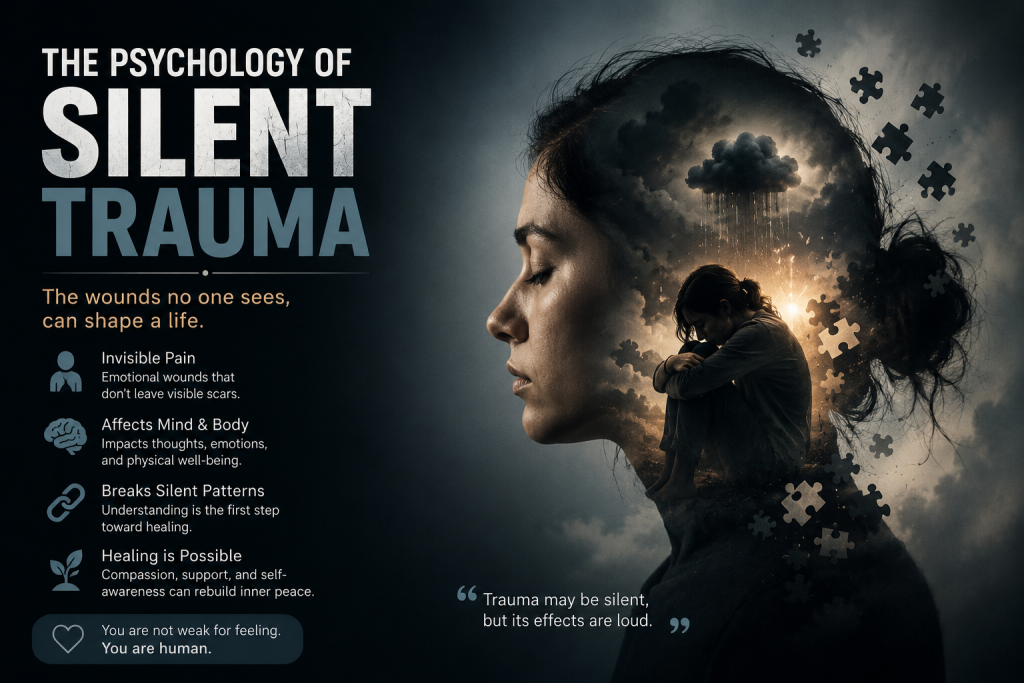
When Pain Stays Hidden, But Changes Everything
In today’s fast-moving world, many people smile in public while silently fighting emotional battles inside. Not every wound is visible. Some pain lives quietly in the mind, affecting emotions, relationships, confidence, and even physical health. This is known as silent trauma.
Silent trauma is not always caused by one major event. Sometimes it develops slowly through emotional neglect, toxic relationships, childhood experiences, rejection, betrayal, constant stress, or years of feeling unheard. The dangerous part is that many people do not even realize they are carrying trauma until it begins affecting their daily life.
What is Silent Trauma?
Silent trauma refers to emotional or psychological pain that remains unexpressed or unnoticed for a long period of time. A person may continue working, studying, smiling, or talking normally, but internally they may feel emotionally exhausted, disconnected, anxious, or broken.
Unlike physical injuries, emotional trauma often hides behind:
- Silence
- Mood swings
- Overthinking
- Emotional numbness
- Isolation
- Anger or irritability
- Difficulty trusting others
- Sudden emotional reactions
Many individuals learn to “survive” instead of truly healing.
Psychological Effects of Silent Trauma
Silent trauma can deeply affect the human mind and behavior. Over time, unresolved emotional pain may lead to:
1. Anxiety and Overthinking
The brain stays in a constant state of alertness. Small situations may feel overwhelming, and the person may continuously expect something bad to happen.
2. Emotional Numbness
Some people stop expressing emotions completely. They may appear cold or distant, but internally they are emotionally tired.
3. Trust Issues
Trauma can make individuals fearful of emotional attachment, leading to difficulties in relationships and communication.
4. Low Self-Worth
People carrying silent trauma often blame themselves for situations they could never control.
5. Physical Symptoms
Psychological pain can also affect the body through:
- Headaches
- Sleep problems
- Fatigue
- Body pain
- Panic attacks
- Appetite changes
The body remembers what the mind tries to forget.
Why Do People Stay Silent About Trauma?
There are many reasons why people hide their pain:
- Fear of judgment
- Lack of emotional support
- Cultural pressure
- Feeling misunderstood
- Believing their pain is “not serious enough”
- Difficulty expressing emotions
Many individuals are told to “stay strong,” but true strength also includes asking for help and allowing yourself to heal.
The Importance of Healing
Healing from silent trauma does not happen overnight. It is a gradual psychological process that requires self-awareness, emotional safety, and support.
Healthy healing methods include:
- Professional therapy
- Emotional expression
- Journaling
- Mindfulness and relaxation techniques
- Supportive relationships
- Self-care and healthy boundaries
A psychologist helps individuals understand the root of their emotional pain instead of only treating the visible symptoms.
How Society Can Help
As a society, we must normalize conversations about mental health. Many people are silently suffering while appearing “fine” on the outside. Kindness, empathy, and emotional understanding can become powerful tools of healing.
Sometimes, one supportive conversation can save someone from years of emotional isolation.
Final Thoughts
Silent trauma may not leave visible scars, but its effects can shape a person’s entire life. Mental pain deserves the same attention as physical pain. Healing begins when people feel safe enough to speak, express, and seek help without fear.
Being emotionally affected does not make a person weak. It makes them human.